- AI Pulse
- Posts
- 🚀 Will AI Map the World?
🚀 Will AI Map the World?
Google just solved AI's biggest navigation flaw. See how this massive mapping breakthrough will disrupt global logistics forever.

Rahul G. Iyer
February 18, 2026

In partnership with


Hello There!
Google researchers have developed MapTrace to finally teach AI how to navigate physical spaces without drawing routes straight through walls. While Google improves local navigation, Microsoft is zooming out globally by pledging a massive $50 billion investment to expand artificial intelligence infrastructure and training across the Global South. To see how all these rapid advancements are coming together, you can tune into the fully virtual Google I/O 2026 conference this May to watch major updates on Gemini and agentic coding.
Here's what's making headlines in the world of AI and innovation today.
In today’s AI Pulse
🎙️ Wispr Flow – Speak fuller prompts. Get better AI answers.
🧭 You.com – Find your highest-impact AI use cases.
💸 Mindstream – Turn AI tools into real income.
🗺️ Google – Teaches AI To Read Maps
🌍 Microsoft – Pledges $50 Billion For AI
🎉 Google – Teases Agentic Coding This May
⚡ Quick Hits – IN AI TODAY
🛠️ Tool to Sharpen Your Skills –🎓 AIGPE® AI-Powered WBS Specialist Certification (with ChatGPT)
The coming years won’t just transform technology; they’ll reshape your home, your family life, and the control you have online.
Speak fuller prompts. Get better answers.
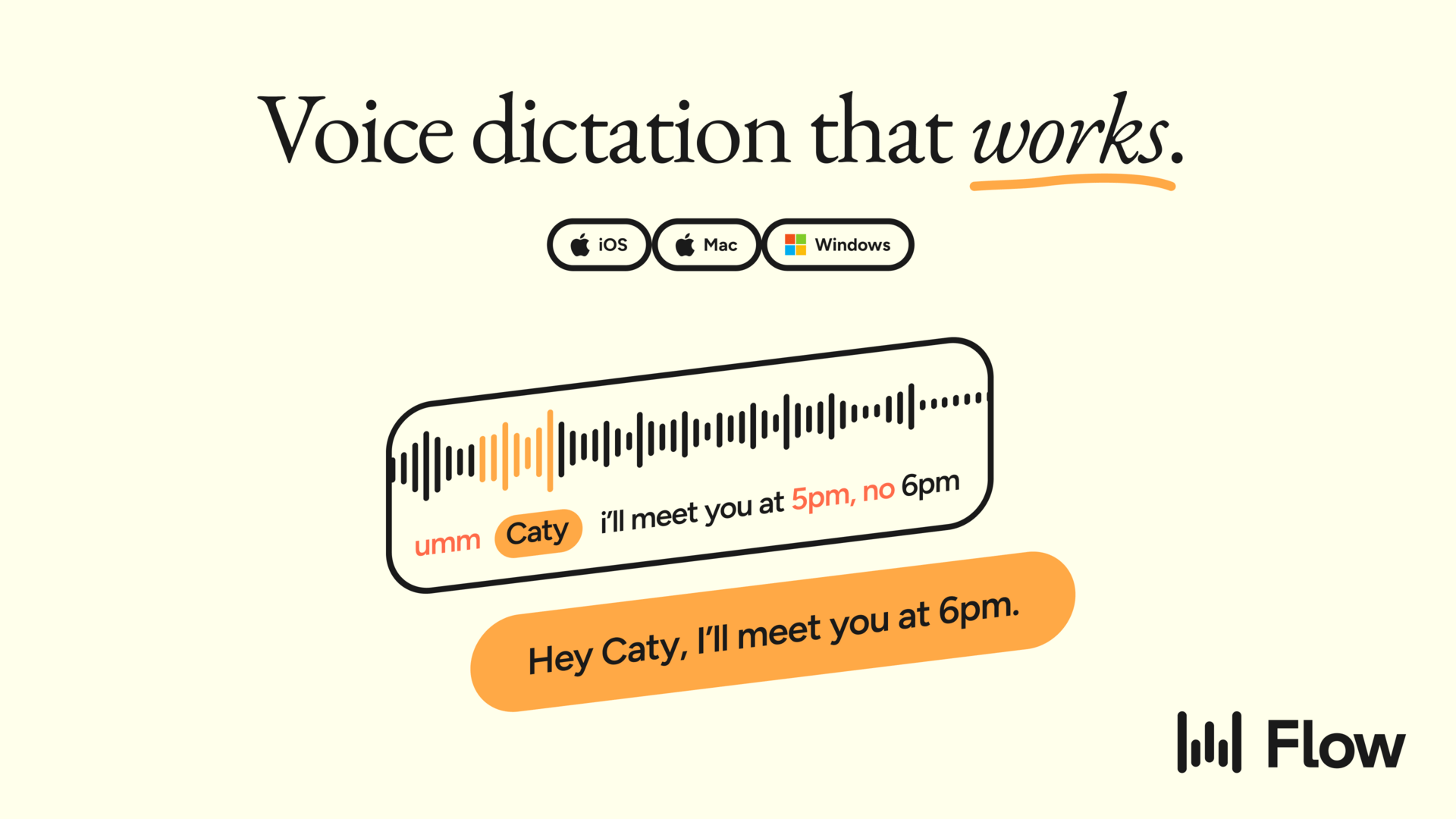
Stop losing nuance when you type prompts. Wispr Flow captures your spoken reasoning, removes filler, and formats it into a clear prompt that keeps examples, constraints, and tone intact. Drop that prompt into your AI tool and get fewer follow-up prompts and cleaner results. Works across your apps on Mac, Windows, and iPhone. Try Wispr Flow for AI to upgrade your inputs and save time.
AI is all the rage, but are you using it to your advantage?

Successful AI transformation starts with deeply understanding your organization’s most critical use cases. We recommend this practical guide from You.com that walks through a proven framework to identify, prioritize, and document high-value AI opportunities. Learn more with this AI Use Case Discovery Guide.
Master ChatGPT for Work Success
ChatGPT is revolutionizing how we work, but most people barely scratch the surface. Subscribe to Mindstream for free and unlock 5 essential resources including templates, workflows, and expert strategies for 2025. Whether you're writing emails, analyzing data, or streamlining tasks, this bundle shows you exactly how to save hours every week.

Image Credit: AIGPE®
🧠The Pulse
Google researchers created MapTrace, a synthetic data pipeline training multimodal models to navigate maps. Multimodal language models struggle with spatial reasoning, so the team generated two million map‑path pairs using Gemini 2.5 Pro and Imagen 4 to teach AI to trace routes while respecting constraints and close a critical data gap.
📌The Download
Spatial reasoning gap: Today’s multimodal AI can identify scenes but cannot navigate them. Models draw routes through walls or shops because they lack the spatial grammar needed to understand connectivity and obstacles.
Synthetic pipeline: MapTrace uses generative models to build fictional maps and mask critics to find walkable regions. It converts pixel clusters into graphs and then employs a path critic to verify shortest routes using Dijkstra’s algorithm.
Open‑source dataset: Google released a 2‑million‑sample dataset built with Gemini 2.5 Pro and Imagen 4. Each sample pairs a synthetic map with a start‑to‑finish path that respects walls and walkways, giving researchers the data needed to teach AI how to navigate.
Better AI navigation: Models fine‑tuned on a subset of the dataset significantly reduced path‑tracing errors on the MapBench benchmark. Google hopes the open dataset will spur research into navigation tasks and inspire other companies to incorporate spatial reasoning into multimodal AI systems.
💡What This Means for You
Navigation and location tasks will soon become accessible to AI. As a professional building applications, you could rely on models that understand real‑world maps, floorplans or diagrams. Expect new products for indoor navigation, maintenance and logistics that harness synthetic data to teach AI spatial reasoning and unlock market opportunities.

Image Credit: AIGPE®
🧠The Pulse
Microsoft leaders Brad Smith and Natasha Crampton warned at the India AI Impact Summit that AI adoption is lagging in the Global South, with usage half that of the Global North. They pledged a US$50 billion investment and a five‑part program to expand infrastructure, skills, multilingual AI, innovation and access globally.
📌The Download
Global AI gap: Microsoft’s AI Diffusion Report reveals usage in the Global North is double that of the Global South. Without urgent action, leaders warn that developing countries will miss out on AI‑driven economic growth.
Massive investment: To bridge that gap, Microsoft will spend US$50 billion by 2030 on datacenters, energy and connectivity across the Global South. It already invested over US$8 billion last year and is working with local partners to bring internet access to 250 million people.
Five strategic steps: Microsoft’s program focuses on building infrastructure, training people, developing multilingual AI, fostering local innovations, and measuring progress. It has poured more than US$2 billion into AI skilling programs and launched Elevate for Educators to train two million teachers across India.
Sovereignty: Microsoft insists AI growth respect digital sovereignty. It provides sovereign controls in Azure, joins the Trusted Tech Alliance, and urges public‑private partnerships to fund infrastructure, expand connectivity and protect customer data.
💡What This Means for You
As AI adoption accelerates unevenly, professionals should watch for new markets and skills programmes. Companies investing in the Global South could unlock talent and customers, but must navigate digital sovereignty and infrastructure gaps. Building AI capabilities, training staff and forming cross‑sector partnerships will be vital in this emerging landscape.

Image Credit: AIGPE®
🧠The Pulse
Google announced that its annual I/O conference will stream online May 19–20 2026. The event will showcase the latest Gemini model updates, agentic coding demos and other AI breakthroughs across Android, Chrome, Cloud and more. Registration is open to developers and enthusiasts globally. Participants can attend keynotes, dialogues and demos virtually worldwide.
📌The Download
Online conference: Google I/O 2026 will be streamed worldwide on May 19–20. Instead of an in‑person gathering, viewers can watch keynotes, technical sessions and product demos from anywhere, removing travel barriers and enabling broader access for developers and enthusiasts.
Gemini & coding: Google promises to reveal major upgrades to its Gemini model family and demonstrate agentic coding capabilities—showing how AI can plan and execute multi‑step tasks across Android, Chrome, Cloud and more.
Dialogues & demos: The event will feature keynotes, panel discussions and live demos with leading technologists and thinkers exploring how AI is reshaping software development, user experiences and digital society. Dialogues sessions return to provide deep conversations on ethics and innovation.
Global engagement: Registration is now open to developers and enthusiasts worldwide. Attendees can sign up for updates, experiment with new APIs and SDKs, and engage with the developer community through virtual networking and Q&A sessions online globally.
💡What This Means for You
Google I/O remains the pulse of the developer community. Whether you build apps or evaluate AI products, the conference offers a window into the latest models and tools. Plan to tune in for insights on agentic coding and new APIs, and use the sessions to spark new projects this spring.
IN AI TODAY - QUICK HITS
⚡Quick Hits (60‑Second News Sprint)
Short, sharp updates to keep your finger on the AI pulse.
Amazon’s US$50 B Government AI Supercomputer Push: Amazon announced it will invest up to US$50 billion to build AI and high‑performance computing infrastructure for U.S. federal agencies. The plan adds 1.3 gigawatts of capacity across AWS Top Secret, Secret and GovCloud regions, giving government customers access to advanced AI services, models and chips. This move will accelerate missions and research.
Microsoft’s Agentic Work Revolution: In a WorkLab column, Microsoft’s Jared Spataro describes the next phase of workplace AI as agentic systems that plan, execute, verify and revise multi‑step tasks. He explains how planner and worker agents coordinate to handle goals end‑to‑end, using tools like GitHub Copilot to iterate and check results within workflows.
TOOL TO SHARPEN YOUR SKILLS
📈Improve Processes. Drive Results. Get Certified.

AIGPE® 8D Problem Solving Expert Certification
Learn how to solve tough problems with the 8D method clearly and simply. Discover how to find the real cause of issues, fix them with the right actions, and make sure they don’t come back. Build confidence to lead teams and create lasting improvements.
That’s it for today’s AI Pulse!We’d love your feedback, what did you think of today’s issue? Your thoughts help us shape better, sharper updates every week. |
🙌 About Us
AI Pulse is the official newsletter of AIGPE®. Our mission: help professionals master Lean, Six Sigma, Project Management, and now AI, so you can deliver breakthroughs that stick.
Love this edition? Share it with one colleague and multiply the impact.
Have feedback? Hit reply, we read every note.
See you next week,
Team AIGPE®