- AI Pulse
- Posts
- What Clients Pay Me For When They Hire Me As Their AI Consultant
What Clients Pay Me For When They Hire Me As Their AI Consultant
A Decision-Based Guide Showing Exactly What to Ask AI (50 Real Work Situations)

Rahul G. Iyer
December 28, 2025

In partnership with


Hello There!
Today’s edition: Key AI updates shaping work today, followed by a client-grade guide showing exactly what to ask AI in 50 real work situations.
Student drone teams are racing to detect and extinguish wildfires in minutes using autonomous AI-powered aircraft, which means emergency response is becoming a software problem and corporate professionals may soon see robotics saving lives before meetings even start. At the same time, Richtech is taking its humanoid robot Dex to the CES show floor to brew coffee, move goods, and monitor spaces, quietly signaling that multi-role robots may soon appear in real workplaces instead of glossy demos. And as SoftBank builds a massive AI supercomputer with Blackwell GPUs to power Japan’s national AI ambitions, the message for professionals is clear: compute, energy efficiency, and geography are becoming career-shaping factors, not just technical footnotes.
Here’s what’s shaping the future of AI today.
In today’s AI Pulse
🔗 Levanta – Why affiliate marketing still wins after AI.
💰 Masterworks – Invest in art that outperforms markets.
💸 Mindstream – 200+ AI income ideas you can start today.
🚒 Drones – Race To Fight Wildfires Faster.
🤖 Humanoid Robot – Dex Debuts At CES
🏭 Softbank – Builds Blackwell Supercomputer For Japan.
💡Exactly What to Ask AI at Work (Free PDF Download)
⚡ In AI Today – Quick Hits
The next wave of AI might not fold your laundry… but it could finally untangle your entire life.
The Future of Shopping? AI + Actual Humans.

AI has changed how consumers shop by speeding up research. But one thing hasn’t changed: shoppers still trust people more than AI.
Levanta’s new Affiliate 3.0 Consumer Report reveals a major shift in how shoppers blend AI tools with human influence. Consumers use AI to explore options, but when it comes time to buy, they still turn to creators, communities, and real experiences to validate their decisions.
The data shows:
Only 10% of shoppers buy through AI-recommended links
87% discover products through creators, blogs, or communities they trust
Human sources like reviews and creators rank higher in trust than AI recommendations
The most effective brands are combining AI discovery with authentic human influence to drive measurable conversions.
Affiliate marketing isn’t being replaced by AI, it’s being amplified by it.
Last Time the Market Was This Expensive, Investors Waited 14 Years to Break Even

In 1999, the S&P 500 peaked. Then it took 14 years to gradually recover by 2013.
Today? Goldman Sachs sounds crazy forecasting 3% returns for 2024 to 2034.
But we’re currently seeing the highest price for the S&P 500 compared to earnings since the dot-com boom.
So, maybe that’s why they’re not alone; Vanguard projects about 5%.
In fact, now just about everything seems priced near all time highs. Equities, gold, crypto, etc.
But billionaires have long diversified a slice of their portfolios with one asset class that is poised to rebound.
It’s post war and contemporary art.
Sounds crazy, but over 70,000 investors have followed suit since 2019—with Masterworks.
You can invest in shares of artworks featuring Banksy, Basquiat, Picasso, and more.
24 exits later, results speak for themselves: net annualized returns like 14.6%, 17.6%, and 17.8%.*
My subscribers can skip the waitlist.
*Investing involves risk. Past performance is not indicative of future returns. Important Reg A disclosures: masterworks.com/cd.
Turn AI Into Extra Income

You don’t need to be a coder to make AI work for you. Subscribe to Mindstream and get 200+ proven ideas showing how real people are using ChatGPT, Midjourney, and other tools to earn on the side.
From small wins to full-on ventures, this guide helps you turn AI skills into real results, without the overwhelm.
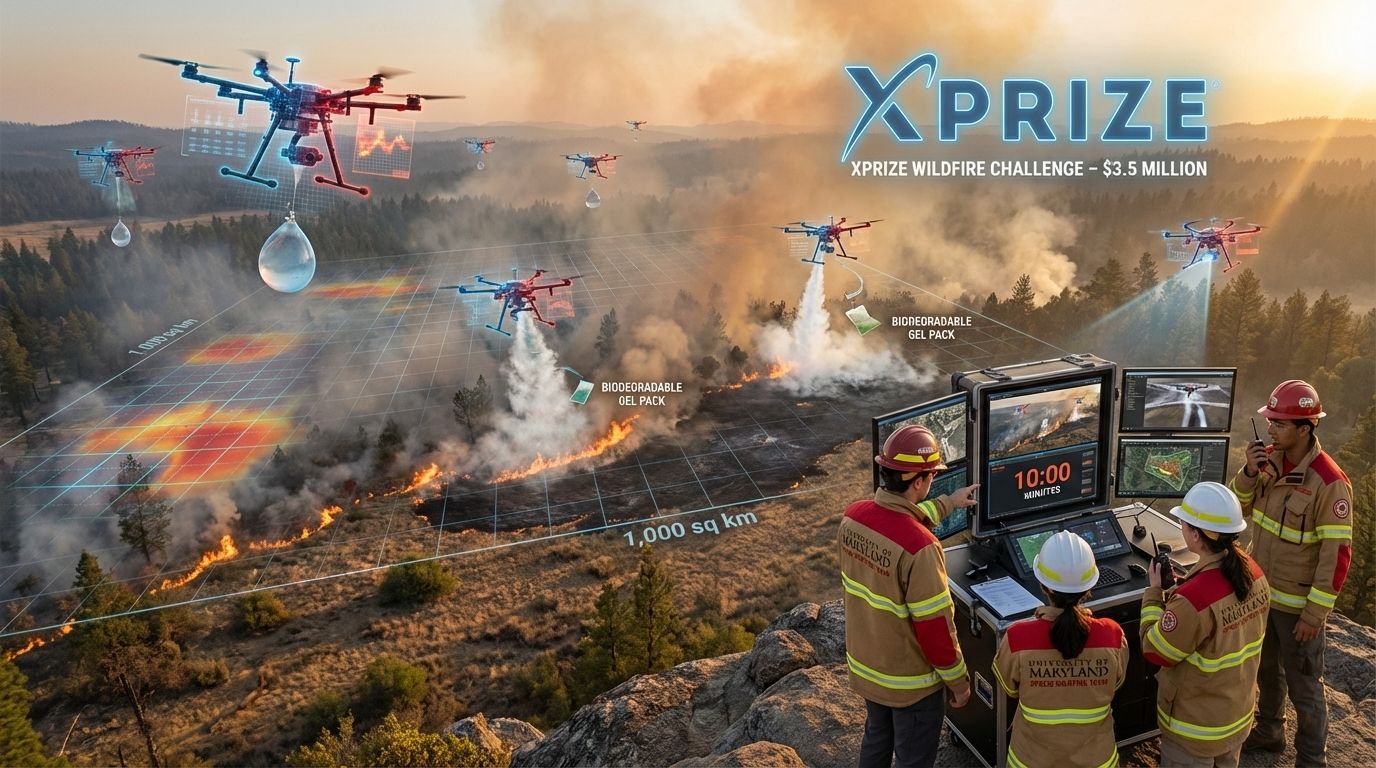
Image Credit: AIGPE®
🧠The Pulse
In the XPRIZE Wildfire competition, student teams from the University of Maryland are testing autonomous drones that detect and extinguish brushfires. The challenge requires drones to locate fires across 1,000 square kilometres and snuff them out within 10 minutes using water‑dropping mechanisms.
📌The Download
Autonomous search: Competing teams deploy unmanned aerial systems capable of independently scanning large territories for early fire signals. Using thermal cameras and AI-based pattern recognition, the drones must reliably distinguish active wildfires from false positives such as vehicles, buildings, or sun-heated terrain.
Water-drop innovations: The University of Maryland team uses water-filled balloons released from multirotor drones, while other teams test gel packs and lightweight foam suppressants. These approaches prioritize rapid deployment, minimal payload weight, and precision targeting over traditional firefighting methods.
Rapid response requirement: To claim the $3.5 million XPRIZE, systems must detect and suppress a wildfire within ten minutes across a one-thousand-square-kilometer test area. This constraint mirrors real wildfire scenarios where delayed response dramatically increases damage and risk.
Broader significance: As climate change accelerates wildfire frequency, autonomous aerial suppression systems could augment human firefighters, reduce exposure to danger, and reshape emergency response, though airspace regulation, safety standards, and liability frameworks remain unresolved challenges globally.
💡What This Means for You
AI‑driven drones could soon assist or even replace human responders in dangerous tasks. For professionals in logistics or operations, these autonomous systems demonstrate how robotics can tackle large‑scale sensing and intervention challenges, hinting at new commercial applications beyond firefighting.

Image Credit: AIGPE®
🧠The Pulse
Richtech Robotics will debut its humanoid robot Dex at CES 2026. Powered by NVIDIA’s Jetson Thor chip and trained using Isaac simulation frameworks, Dex can run for four hours, adapt in real time and showcase tasks ranging from coffee making to logistics.
📌The Download
CES debut: Dex will headline Richtech Robotics’ booth at CES 2026, where the company plans live demonstrations and scheduled meetings with customers, partners, and investors. The showcase positions Dex as the public face of Richtech’s broader robotics solution platform.
Adaptive intelligence: Dex is powered by NVIDIA’s Jetson Thor platform and trained using Isaac Sim and Isaac Lab frameworks. Richtech says this enables real-time reasoning, precise task execution, and adaptation in dynamic environments, with operational endurance of roughly four hours per charge.
Showcase of applications: At CES, Dex will demonstrate multiple modular roles, including coffee preparation through the ADAM module, food delivery via Matradee Plus, logistics handling with Titan, and visual monitoring using the Scorpion system, highlighting cross-industry versatility.
Market positioning: Richtech frames Dex as a catalyst for its automation strategy across commercial, industrial, and data services markets. The company aims to integrate physical robots with cloud infrastructure, enabling continuous AI-driven learning, updates, and performance improvements at scale.
💡What This Means for You
Humanoid robots are moving from concept to commercial show floor. Dex’s modular demos suggest a future where one platform performs multiple tasks across industries. Professionals should watch how such robots shift workflows in hospitality, logistics and retail, and prepare for integration with existing systems.
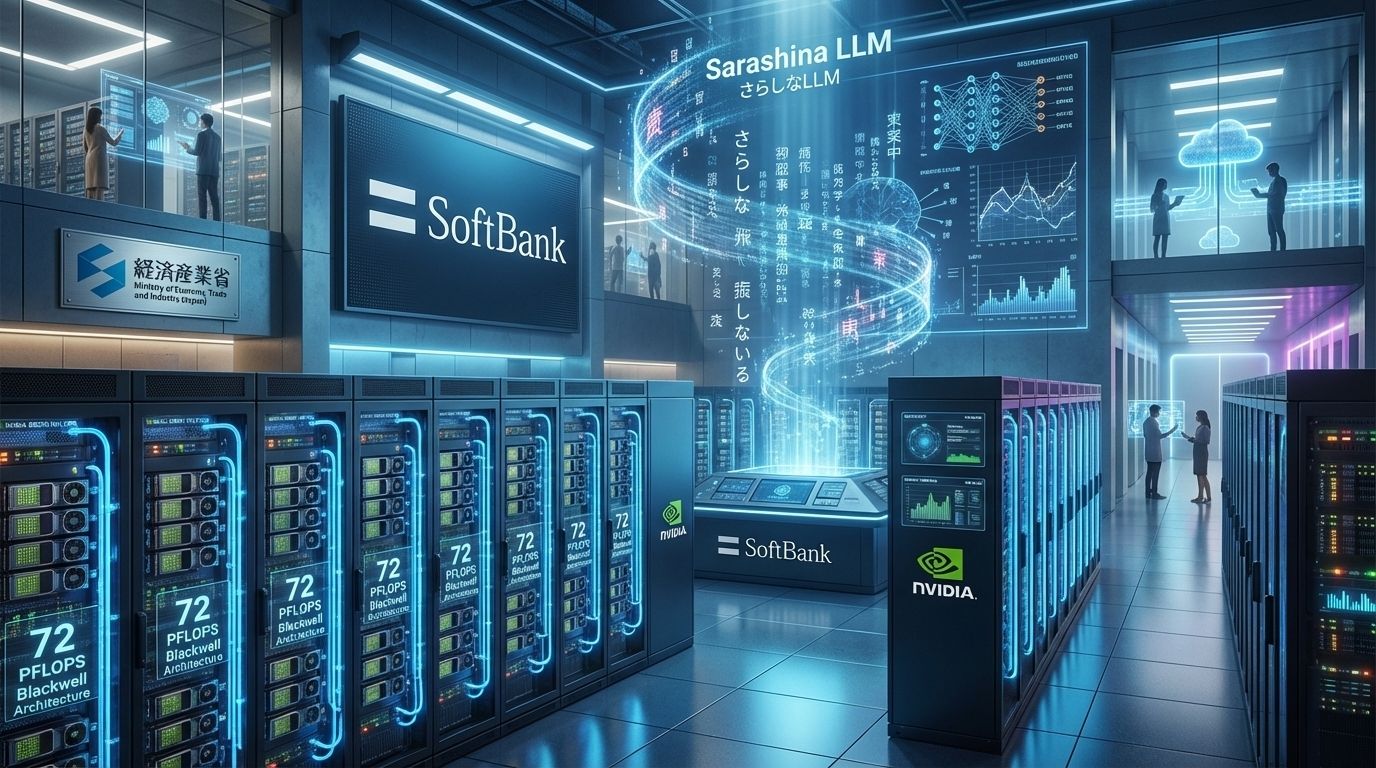
Image Credit: AIGPE®
🧠The Pulse
SoftBank announced an AI computing platform built on the Nvidia GB200 NVL72 system, combining 1,224 Blackwell GPUs with liquid cooling. The platform will support the “Sarashina” large language model and provide computational resources to researchers and startups as part of Japan’s AI strategy.
📌The Download
Monster hardware: SoftBank’s AI platform is built on NVIDIA’s GB200 NVL72 system, packing 1,224 Blackwell GPUs connected through advanced liquid cooling. Each node delivers 72 petaflops of FP8 compute, specifically optimized for training and running large language models at massive scale.
Sarashina LLM: The system will train “Sarashina,” a Japanese-language large model developed under national AI initiatives. Certification by Japan’s Ministry of Economy, Trade and Industry highlights the project’s strategic importance and alignment with government-backed digital transformation goals.
Energy efficiency: Liquid cooling significantly lowers power consumption and heat loss compared with traditional air-cooled data centers. SoftBank plans to open the platform to startups, universities, and enterprises, accelerating domestic AI research while keeping sustainability and operational efficiency in focus.
Strategic positioning: By operating a homegrown AI supercomputer, SoftBank aims to reduce dependence on overseas cloud providers. The move strengthens Japan’s AI sovereignty and positions the country as a regional hub for advanced AI development and research.
💡What This Means for You
Access to state‑of‑the‑art hardware will enable more players to train sophisticated models. Professionals should watch for collaborative opportunities and new applications emerging from Japan’s AI ecosystem. The trend also underscores the value of energy‑efficient data‑centre design as AI workloads explode.
FREE DOWNLOAD - CLIENT GRADE AI GUIDE (PDF)

Most professionals struggle with AI not because the tool is weak, but because they don’t know what to ask in real work situations. This free PDF breaks down the exact decision frameworks I use during paid AI consulting engagements, showing what to ask AI across 50 common workplace scenarios. You’ll learn how top professionals move from guesswork to clarity, avoid weak outputs, reduce rework, and make better decisions using AI. The goal is simple: help you use AI with confidence, precision, and intent, exactly when it matters at work.
The value of AI is not in what it can do, but in what you know how to ask.
|

IN AI TODAY - QUICK HITS
⚡Quick Hits (60‑Second News Sprint)
Short, sharp updates to keep your finger on the AI pulse.
Microsoft’s AI Chief Warns of a $100‑Billion Arms Race: Mustafa Suleyman, CEO of Microsoft AI, told the Times of India that competing in artificial intelligence will cost companies hundreds of billions over the next five to ten years. He emphasised that only those with massive capital, hardware and talent could keep up and described a fierce talent war.
MiniMax M2.1 Bolsters Multilingual Coding and Reasoning: Chinese AI lab MiniMax unveiled M2.1, an enhanced version of its M2 model optimised for AI agents. The update boosts code quality, reasoning and multilingual support, scoring 72.5% on SWE‑Multilingual and 88.6% on VIBE‑Bench for app and web development.
That’s it for today’s AI Pulse!We’d love your feedback, what did you think of today’s issue? Your thoughts help us shape better, sharper updates every week. |
🙌 About Us
AI Pulse is the official newsletter by AIGPE™. Our mission: help professionals master Lean, Six Sigma, Project Management, and now AI, so you can deliver breakthroughs that stick.
Love this edition? Share it with one colleague and multiply the impact.
Have feedback? Hit reply, we read every note.
See you next week,
Team AIGPETM