- AI Pulse
- Posts
- 🤖The "ChatGPT" for manual labor
🤖The "ChatGPT" for manual labor
How folding laundry is unlocking the next AI revolution.

Rahul G. Iyer
February 07, 2026

Hello There!
A new startup is teaching robots to fold laundry to build a universal AI brain, hinting that the ultimate luxury of the future is never having to struggle with a fitted sheet again. NVIDIA followed up by pumping $2 billion into CoreWeave’s cloud infrastructure, proving that the only thing smarter than selling the chips is owning the data centers they live in. California is tempering the hype by requiring lawyers to verify all AI-generated work, effectively ruling that "my chatbot made it up" is no longer an admissible defense in court.
Here's what's making headlines in the world of AI and innovation today.
In today’s AI Pulse
🤖 Robots – Learn Laundry To Build Brains
💸 NVIDIA – Pumps Billions Into CoreWeave Cloud
🧑⚖️ California – Lawyers Must Verify AI Work
⚡ Quick Hits – IN AI TODAY
🛠️ Tool to Sharpen Your Skills –🎓 AIGPE® Certified AI-Powered Business Case Specialist
The coming years won’t just transform technology; they’ll reshape your home, your family life, and the control you have online.

Image Credit: AIGPE®
🧠The Pulse
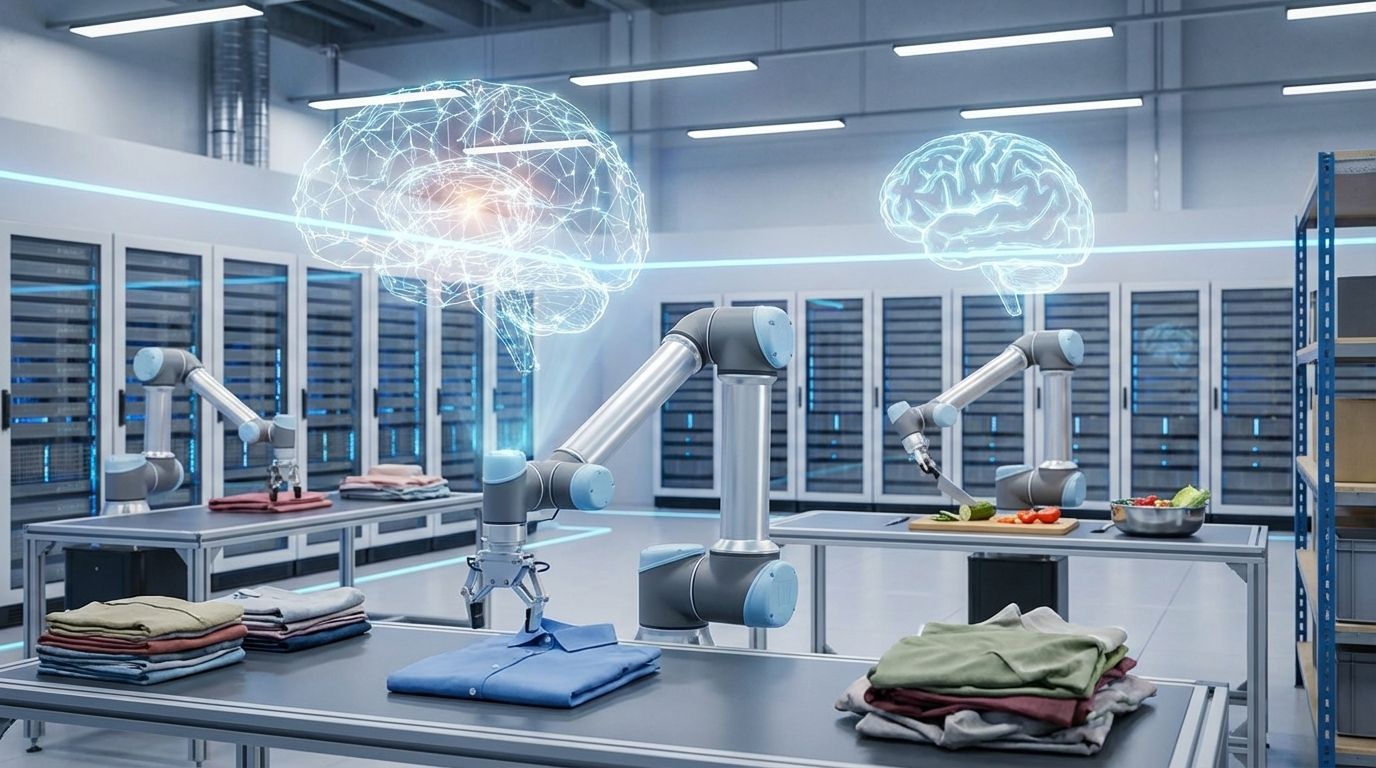
Start‑up Physical Intelligence is training general‑purpose “foundation models” for robots by having dozens of cheap robotic arms fold laundry, sort fabrics, and chop vegetables. Co‑founder Sergey Levine calls it the “ChatGPT for robotics,” aiming to build a single model adaptable to different hardware and tasks.
📌The Download
Data farm – In a Redwood City warehouse, rows of $3 500 robotic arms perform chores—folding pants, turning shirts, peeling zucchinis—under remote supervision. Each task is captured to train a model that can generalize across environments.
Foundation approach – Physical Intelligence believes pooling diverse data will produce a model that allows robots to handle new tasks without retraining. The goal is akin to large language models but for physical manipulation.
Hardware diversity – The company uses low‑cost arms to collect data across varied settings, aiming to build a model that can adapt to different robots, sensors, and objects.
Investors & future – The start‑up is attracting VC interest as industries anticipate robots that can work outside factories. Success could spawn a wave of “robot brains” powering service bots in homes, restaurants, and labs.
💡What This Means for You
Robotics professionals should follow advances in foundation models. Such models could dramatically reduce training time and enable robots to tackle varied tasks. Investing early in data collection and cross‑platform frameworks may yield a competitive advantage when general‑purpose robots hit the market.

Image Credit: AIGPE®
🧠The Pulse
NVIDIA invested $2 billion in CoreWeave at $87.20 per share to boost the AI cloud provider’s data‑center capacity. The funds will not buy Nvidia chips but will accelerate research, hiring, and infrastructure, helping CoreWeave build more than 5 gigawatts of AI capacity by 2030.
📌The Download
Strategic capital – Nvidia doubled its stake in CoreWeave with a $2 billion investment. The cash will fund the expansion of AI‑specialized data centers rather than the purchase of Nvidia GPUs, underscoring the chipmaker’s broader bet on cloud infrastructure.
Aggressive build‑out – CoreWeave plans to create over 5 GW of AI data‑center capacity by 2030. The investment will help accelerate construction projects, research and development, and hiring, making CoreWeave a key alternative for companies unable to access traditional hyperscalers.
Ecosystem play – Nvidia’s backing signals confidence in diversified AI compute providers. CoreWeave sells GPU‑rich cloud services to startups and enterprises competing with Amazon, Microsoft, and Google for generative AI workloads.
Long‑term outlook – Analysts view the deal as a sign that AI demand will continue surging. NVIDIA stands to benefit as both supplier and investor, capturing profits from hardware sales and the expanding cloud market.
💡What This Means for You
Demand for AI compute is skyrocketing. Professionals should monitor new cloud providers like CoreWeave for alternative access to GPUs. Diversifying infrastructure vendors can mitigate shortages and pricing volatility as traditional hyperscalers face supply constraints.

Image Credit: AIGPE®
🧠The Pulse
The California Senate passed a bill mandating that lawyers verify the accuracy of any AI‑generated legal materials they use and prohibiting arbitrators from relying on AI outside the official record. The legislation also requires safeguarding confidential data and bans AI‑driven discrimination, marking one of the first AI rules in legal practice.
📌The Download
Verification required – Attorneys must ensure AI‑generated legal documents are accurate and updated. Failure to verify could result in sanctions or malpractice claims, pushing lawyers to double‑check citations and facts.
Limited delegation – Arbitrators are barred from delegating legal decision‑making to AI or using AI information not part of the case record. This provision aims to preserve human oversight and prevent opaque AI reasoning.
Confidentiality & bias – Lawyers must protect confidential and nonpublic data when using AI and prevent discriminatory outcomes. The bill clarifies that AI cannot be used to discriminate based on protected characteristics.
Nationwide implications – Legal experts say California’s bill could become a model for other states, prompting bar associations and firms nationwide to create AI‑use policies and training.
💡What This Means for You
If you practice law or work with legal teams, prepare to verify AI outputs rigorously. Adopt strict data‑handling policies and ensure AI tools don’t embed discriminatory biases. This law may soon influence wider regulatory frameworks and set ethical norms for AI in professional services.
IN AI TODAY - QUICK HITS
⚡Quick Hits (60‑Second News Sprint)
Short, sharp updates to keep your finger on the AI pulse.
Argentina’s Postal Hub Gets 240 Sorting Robots: Libiao Robotics installed 240 autonomous robots at Correo Argentino’s Monte Grande parcel hub near Buenos Aires. The facility processes up to 9,000 parcels per hour—three times its previous capacity—showing how modular robot sorters can modernize postal infrastructure.
QCraft’s 500+ TOPS Driving Platform: Chinese autonomous‑driving firm QCraft unveiled QPilot 2.0, an intelligent driving platform delivering more than 500 tera operations per second (TOPS). The company says its Urban Navigation on Autopilot system is now installed in over one million vehicles and aims to bring autonomous driving into everyday life.
TOOL TO SHARPEN YOUR SKILLS
📈Improve Processes. Drive Results. Get Certified.

AIGPE® Certified AI-Powered Business Case Specialist
Master the Certified AI-Powered Business Case Specialist course to build persuasive, structured business cases using ChatGPT, enhance decision-making, secure funding, and earn professional credits while combining timeless strategy with modern AI techniques.
That’s it for today’s AI Pulse!We’d love your feedback, what did you think of today’s issue? Your thoughts help us shape better, sharper updates every week. |
🙌 About Us
AI Pulse is the official newsletter of AIGPE®. Our mission: help professionals master Lean, Six Sigma, Project Management, and now AI, so you can deliver breakthroughs that stick.
Love this edition? Share it with one colleague and multiply the impact.
Have feedback? Hit reply, we read every note.
See you next week,
Team AIGPE®