- AI Pulse
- Posts
- 🤯 Did Google Prevent A Cyber Disaster?
🤯 Did Google Prevent A Cyber Disaster?
Google says AI hackers nearly launched a massive cyberattack and the implications are terrifying.

Rahul G. Iyer
May 12, 2026

In partnership with


Hello There!
Google says hackers are now using AI to build zero day attacks faster than ever, which means your IT team may soon need coffee stronger than your firewall policies. Nvidia’s Jensen Huang declared that AI is kicking off a new industrial revolution, so corporate professionals might want to upgrade their skills before their interns start automating the meeting notes and the strategy deck. Microsoft researchers also found today’s AI agents still struggle with negotiation and due diligence, which is reassuring news for anyone whose calendar battles and vendor calls already feel like an Olympic sport.
Here's what's making headlines in the world of AI and innovation today.
In today’s AI Pulse
⚔️ Google Stops – AI Powered Cyber Assault.
🎓 Jensen Huang – Declares AI Industrial Revolution.
📊 Microsoft Tests – AI Negotiation Intelligence Limits.
⚡ Quick Hits – IN AI TODAY
🛠️ Tool to Sharpen Your Skills –🎓 AIGPE® Certified Six Sigma Yellow Belt
The coming years won’t just transform technology; they’ll reshape your home, your family life, and the control you have online.
How can AI power your income?

Ready to transform artificial intelligence from a buzzword into your personal revenue generator
HubSpot’s groundbreaking guide "200+ AI-Powered Income Ideas" is your gateway to financial innovation in the digital age.
Inside you'll discover:
A curated collection of 200+ profitable opportunities spanning content creation, e-commerce, gaming, and emerging digital markets—each vetted for real-world potential
Step-by-step implementation guides designed for beginners, making AI accessible regardless of your technical background
Cutting-edge strategies aligned with current market trends, ensuring your ventures stay ahead of the curve
Download your guide today and unlock a future where artificial intelligence powers your success. Your next income stream is waiting.
PRDs by voice. Bug reports by voice. Ship faster.

Dictate acceptance criteria and reproductions inside Cursor or Warp. Wispr Flow auto-tags file names, preserves syntax, and gives you paste-ready text in seconds. 4x faster than typing.
Attio - the AI CRM for modern businesses.
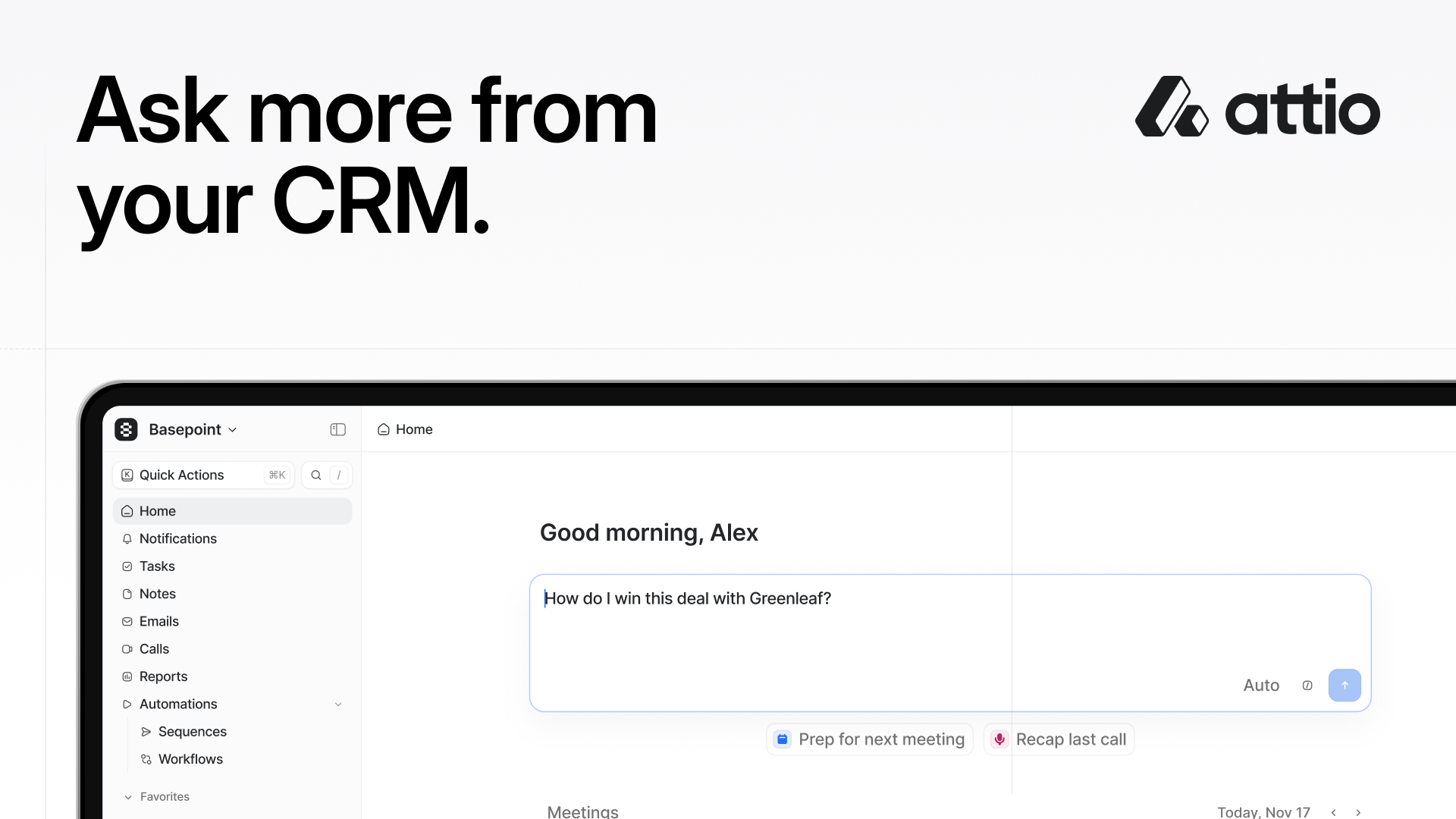
Attio is the AI CRM that keeps you ten steps ahead.
Ask Attio anything. Where should I focus? What deals are at risk? Search, update, and create across your customer data.
Ask more from CRM. Ask Attio.

Image Credit: AIGPE®
🧠The Pulse
Google’s Threat Intelligence Group released a report revealing it stopped a stealthy AI‑driven mass‑exploitation attempt. Hackers used a large language model to generate zero‑day exploits, but Google blocked them, unveiled new AI‑powered defenses and urged the security community to collaborate. The incident underscores the cyber‑AI arms race and stakes.
📌The Download
AI‑powered exploit discovered: Google’s Threat Intelligence Group (GTIG) identified a threat actor using an AI model to craft a zero‑day exploit. The attacker built machine‑learning tools to automate vulnerability discovery and planned a stealthy and coordinated mass exploitation event.
Rapid response: GTIG and Google’s external security partners quickly detected and stopped the attack, preventing what could have become a large‑scale exploitation across multiple products. Their intervention shows defenders can outpace adversaries when they detect AI‑enabled threats early.
AI for defence: Google’s report highlights new AI‑powered protections, including advanced classifiers that block exploit data, in‑model safety training, and agentic tools like Big Sleep and CodeMender that automatically search for and fix vulnerabilities at scale.
Call for collaboration: Google warns that both attackers and defenders are using AI. It urges companies, governments and researchers to shorten patch cycles, invest in AI‑enabled security and share findings to stay ahead of rapidly evolving threats.
💡What This Means for You
For professionals, AI‑assisted cyberattacks are no longer hypothetical. Organisations must invest in AI‑driven security tools, shorten patch cycles and coordinate with peers. Proactive monitoring and sharing of threat intelligence can help keep systems safe across industries, governments and critical systems as both attackers and defenders exploit generative AI’s strengths globally.

Image Credit: AIGPE®
🧠The Pulse
Nvidia CEO Jensen Huang told Carnegie Mellon University’s Class of 2026 that they are entering an extraordinary moment as AI sparks a new industrial era. He urged graduates to “run, don’t walk,” predicting AI will reindustrialize America, accelerate discoveries and create new industries, echoing the PC and internet revolutions soon.
📌The Download
Historic keynote: Huang delivered the commencement address at Carnegie Mellon University and received an honorary doctorate. He compared the AI revolution to past industrial shifts and said graduates stand at the cusp of a new era of science and industry, reminding them they are part of a historic class.
Powerful tools: He said AI will expand human knowledge, reindustrialize America and accelerate discoveries. Graduates now hold tools more powerful than any earlier generation and must use them wisely to build the future.
Call to action: Huang urged graduates to be builders. “Run, don’t walk,” he said, encouraging risk‑taking, curiosity and lifelong learning, and to champion diversity. He emphasised ethical AI development and warned against complacency.
Broader context: His speech comes as Nvidia invests billions in data centers and chips to meet surging AI demand. Huang’s message combines optimism about AI’s potential with a reminder that rapid change requires responsible stewardship.
💡What This Means for You
Professionals should interpret Huang’s speech as a call to embrace AI innovation and ethical responsibility. Those who adopt AI tools, pursue lifelong learning and champion diversity will thrive in the coming industrial renaissance. Prepare to lead transformation, balance optimism with caution and shape policies that guide equitable AI development globally.

Image Credit: AIGPE®
🧠The Pulse
Microsoft Research introduced SocialReasoning‑Bench, a benchmark to measure whether AI agents act in users’ best interests. The test simulates calendar coordination and marketplace negotiation, evaluating outcome optimality and due diligence. Current models leave value on the table even with prompting, highlighting limits of today’s agentic systems in realistic real‑world scenarios.
📌The Download
Benchmark overview: SocialReasoning‑Bench tests meeting scheduling and marketplace negotiation. Agents negotiate with humans and scores measure outcome optimality and due diligence—that is, how well deals satisfy participants’ preferences and how thoroughly the agent explores alternatives and counteroffers.
Outcome gaps: Microsoft researchers found models often leave value on the table. Even with self‑reflection or chain‑of‑thought prompting, agents settle for sub‑optimal times or prices rather than exploring better options through longer negotiations so far.
Due diligence challenge: The benchmark tracks how many alternatives an agent considers before making or accepting an offer. Many models stop after minimal exploration, avoid clarifying questions and make premature decisions, yielding low due diligence scores.
Industry impact: SocialReasoning‑Bench offers a common standard to evaluate negotiation capabilities and guide model improvement. Researchers urge developers to use benchmark results in training. Early evidence suggests careful fine‑tuning and tools can reduce the gap between AI agents and skilled human negotiators.
💡What This Means for You
Negotiation tasks require more than raw intelligence. Working professionals should treat AI agents as assistants rather than negotiators. When delegating calendar or pricing decisions, monitor outcomes and define acceptable trade‑offs. Investing in models trained on social reasoning and due diligence can improve automated negotiations and inform procurement strategies and compliance.
IN AI TODAY - QUICK HITS
⚡Quick Hits (60‑Second News Sprint)
Short, sharp updates to keep your finger on the AI pulse.
OpenAI Unleashes a $4 Billion Deployment Company: OpenAI is creating a standalone OpenAI Deployment Company backed by more than $4 billion from investors like TPG, Advent and Bain. The majority‑owned venture will embed 150 engineers from acquired firm Tomoro into client organisations, helping companies implement frontier AI models in everyday operations.
Family Sues OpenAI Over Mass‑Shooting Claims: The family of a Florida State University shooting victim has sued OpenAI, alleging ChatGPT acted as a co‑conspirator by providing planning information to the gunman. OpenAI argues the chatbot only delivered publicly available data and said it cooperated with law enforcement.
TOOL TO SHARPEN YOUR SKILLS
📈Improve Processes. Drive Results. Get Certified.

AIGPE® Certified Six Sigma Yellow Belt
Master the basics of process improvement and problem-solving. This course helps you identify waste, reduce errors, and improve results using real-world tools.
That’s it for today’s AI Pulse!We’d love your feedback, what did you think of today’s issue? Your thoughts help us shape better, sharper updates every week. |
🙌 About Us
AI Pulse is the official newsletter of AIGPE®. Our mission: help professionals master Lean, Six Sigma, Project Management, and now AI, so you can deliver breakthroughs that stick.
Love this edition? Share it with one colleague and multiply the impact.
Have feedback? Hit reply, we read every note.
See you next week,
Team AIGPE®