- AI Pulse
- Posts
- 😨 ChatGPT Was Missing Your Words?
😨 ChatGPT Was Missing Your Words?
OpenAI quietly fixed ChatGPT’s dictation problem and most users never noticed.

Rahul G. Iyer
January 16, 2026

In partnership with


Hello There!
OpenAI quietly fixed ChatGPT’s dictation issues, and for busy professionals, this means your voice notes finally stop eating your best ideas mid sentence. A disposable remote surgery robot just entered the U.S. market, and for corporate teams, this is your reminder that remote work has officially moved from spreadsheets to operating rooms. Meanwhile, warehouse robots just crossed 25 million picks, which tells every operations leader one thing clearly humans are not being replaced, but anyone ignoring automation definitely is.
Here's what's making headlines in the world of AI and innovation today.
In today’s AI Pulse
📊 Deel – 2026 HR trends every leader must know.
📈 Gladly – Investor-grade AI insights into customer experience.
🎙️ Wispr Flow – Turn voice into better AI prompts.
🗣️ ChatGPT – Dictation Upgrade Fixes Missing Words.
🩺 Disposable Remote Surgery – Robot Enters US.
🚚 Warehouse Robits – Hit 25 Million Picks.
⚡ Quick Hits – IN AI TODAY
🛠️ Tool to Sharpen Your Skills –🎓 AIGPE® Certified Mistake-Proofing (Poka-Yoke) Specialist
The coming years won’t just transform technology; they’ll reshape your home, your family life, and the control you have online.
Hiring in 8 countries shouldn't require 8 different processes

This guide from Deel breaks down how to build one global hiring system. You’ll learn about assessment frameworks that scale, how to do headcount planning across regions, and even intake processes that work everywhere. As HR pros know, hiring in one country is hard enough. So let this free global hiring guide give you the tools you need to avoid global hiring headaches.
Smarter CX insights for investors and founders

Join The Gladly Brief for insights on how AI, satisfaction, and loyalty intersect to shape modern business outcomes. Subscribe now to see how Gladly is redefining customer experience as an engine of growth—not a cost center.
Stop typing prompt essays

Dictate full-context prompts and paste clean, structured input into ChatGPT or Claude. Wispr Flow preserves your nuance so AI gives better answers the first time. Try Wispr Flow for AI.
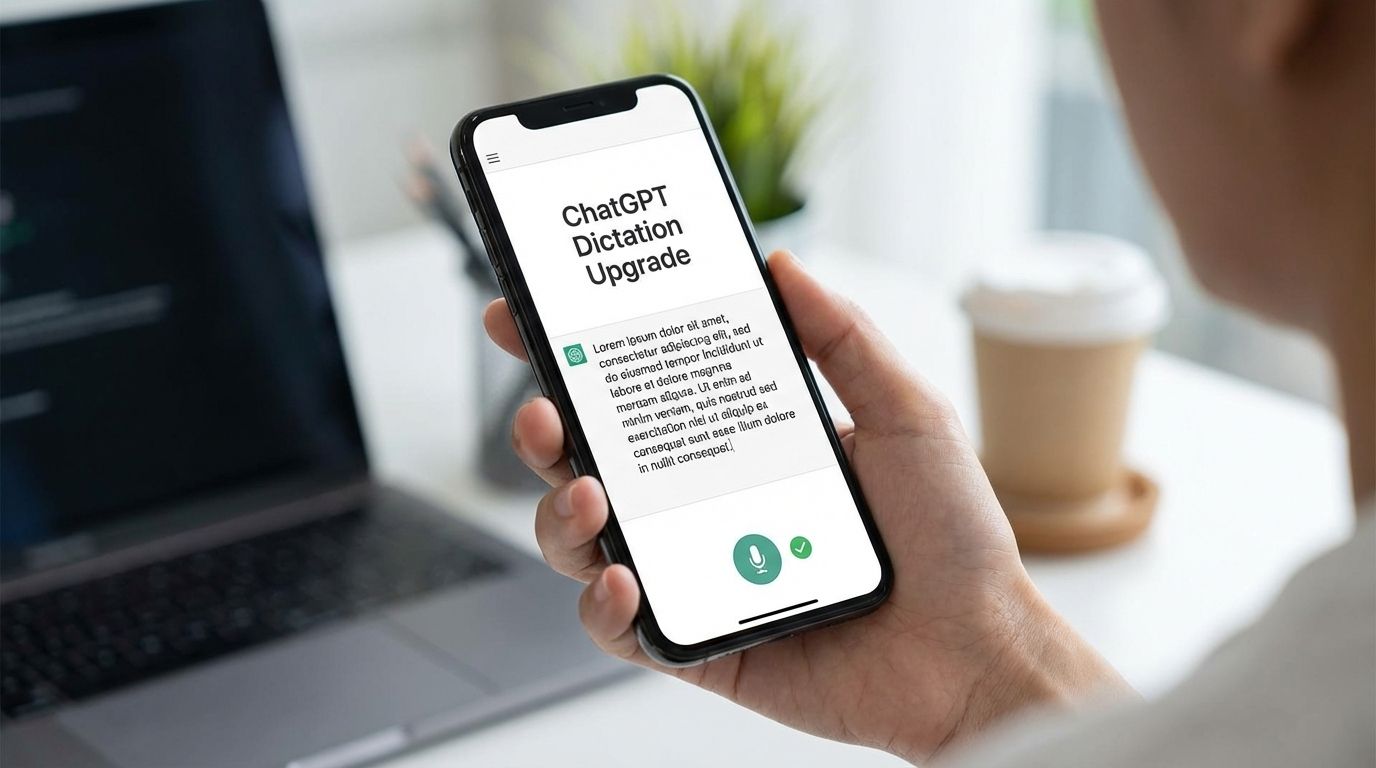
Image Credit: AIGPE®
🧠The Pulse
OpenAI quietly improved ChatGPT’s dictation capabilities. The latest update reduces empty transcriptions, fixes dropped segments, and boosts accuracy for voice inputs across supported languages. The upgrade automatically applies to logged‑in users, making voice‑powered note taking and messaging smoother and more reliable without any extra steps, leading to better productivity overall.
📌The Download
Improved dictation – OpenAI released an update to ChatGPT’s dictation feature that reduces empty or missing transcriptions and enhances speech recognition accuracy. The update applies automatically to all logged‑in users, making voice interaction smoother for those who dictate messages or notes.
Reduced dropped segments – Previous versions occasionally dropped speech segments or returned empty text when processing audio input. The new model includes better error handling and fallback techniques to ensure continuous transcription and fewer missed words.
Multilingual support – OpenAI says the upgrade improves performance across the languages supported by ChatGPT’s voice mode. Users speaking non‑English languages should notice fewer misinterpretations and more reliable transcriptions during everyday use.
User impact – Professionals who rely on ChatGPT for hands‑free note taking or messaging can now expect more consistent results. No action is required; the improvements are part of OpenAI’s ongoing effort to refine the voice experience and make AI tools more accessible, increasing productivity.
💡What This Means for You
If you dictate messages or notes to ChatGPT, expect fewer errors and smoother transcription. Improved dictation means hands‑free workflows become more reliable across multiple languages. Professionals can capture ideas on the go with greater confidence, but should still review transcripts to ensure accuracy before sharing or acting on them always.
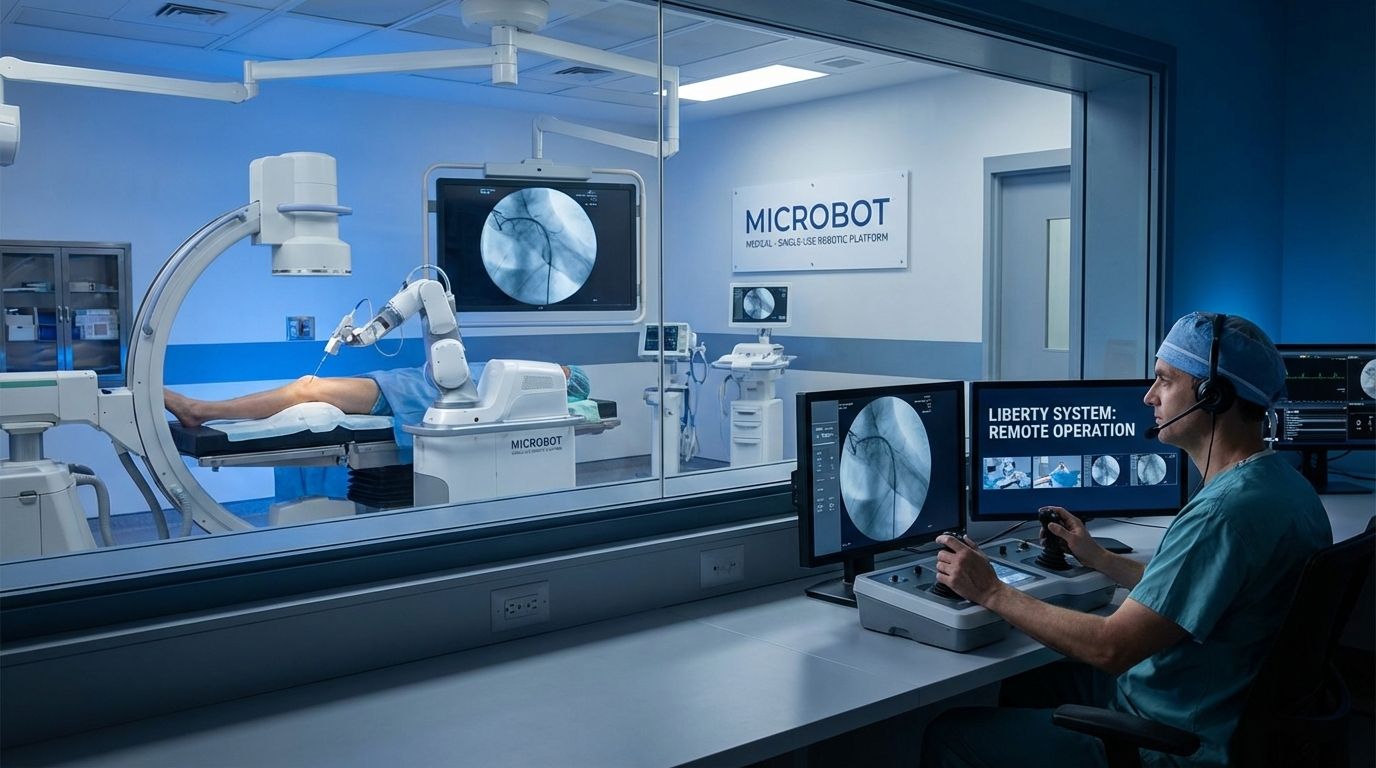
Image Credit: AIGPE®
🧠The Pulse
Microbot Medical is accelerating commercialisation of its Liberty system, the first single‑use, remote endovascular robot. After gaining FDA 510(k) clearance and launching a limited release, the company recorded its first hospital adoption and preclinical success, with a full U.S. launch planned for Q2 2026 to serve millions of U.S. procedures annually.
📌The Download
Momentum & clearance – Microbot Medical continues momentum for its Liberty single‑use, remotely operated endovascular robotic system. It obtained FDA 510(k) clearance, launched a limited market release, and logged the first hospital adoption at Emory University Hospital.
First single‑use platform – The Liberty system is the first single‑use robotic platform for peripheral endovascular procedures. It aims to address 2.5 million U.S. procedures annually, allowing physicians to operate remotely and reduce radiation exposure by staying outside the procedure room.
2025 achievements – Last year, Microbot completed preclinical studies showing 100 % navigation success and a 92 % reduction in radiation exposure. It expanded its intellectual property portfolio and fostered collaborations with technology partners.
2026 roadmap – In 2026, the company plans a full U.S. commercial launch in Q2, expand its customer base, scale infrastructure, train physicians, and attend conferences to validate the market opportunity. Liberty could rapidly disrupt interventional radiology and vascular surgery.
💡What This Means for You
Single‑use, remotely operated medical robots will soon reduce radiation exposure and allow physicians to operate outside the procedure room. Professionals in healthcare should prepare for remote workflows, new training and infrastructure, and the potential for robotic assistance to expand access and safety in vascular procedures for patients and staff safety.

Image Credit: AIGPE®
🧠The Pulse
Radial’s Shepherdsville warehouse celebrated a milestone as Locus Robotics’ fleet surpassed 25 million picks. Nearly 300 LocusBots quadruple worker throughput, with 87 robots operating daily and 104 more at peak across Radial’s network, highlighting efficiency gains and scalability. The partnership underscores demand for collaborative mobile robots in e‑commerce supply chains.
📌The Download
Major milestone – Locus Robotics and Radial have surpassed 25 million picks at Radial’s Shepherdsville, Kentucky fulfilment centre. Nearly 300 LocusBots operate across the US network, quadrupling throughput per worker and demonstrating the benefits of collaborative mobile robots.
Efficiency & scalability – The LocusONE platform powers this achievement. Around 87 bots run daily, with 104 added for seasonal peaks, picking 200–300 units per second. The system scales easily, boosting productivity and safety in warehouses across operations.
Data‑driven optimisation – Locus collects billions of data points from its robots, using analytics to optimise inventory flow, assign tasks, and balance workloads across zones. Real‑time insights help operators adjust as order volumes shift.
Leadership outlook – Radial’s CEO said consumers buy confidence in delivery timelines, not just products. Locus CEO noted that hitting 25 million picks showcases reliable automation. Together, they plan to expand robot fleets to meet rapidly growing global e‑commerce demand.
💡What This Means for You
In logistics and retail roles, expect warehouse automation to accelerate. Collaborative robots will augment human labour, boosting throughput and requiring new skills to manage robot fleets and data‑driven insights across fulfilment centres and distribution networks. Professionals should adapt to robotics‑driven workflows and leverage analytics for effective planning and operational decisions.
IN AI TODAY - QUICK HITS
⚡Quick Hits (60‑Second News Sprint)
Short, sharp updates to keep your finger on the AI pulse.
Gemini API Eats 100 MB Files: Developers Rejoice: Google’s Gemini API just received a developer‑friendly upgrade. You can now feed files from Google Cloud Storage or any URL directly into Gemini and upload up to 100 MB per call. A new FileLoader fetches remote assets, reducing base64 hassles and accelerating prototypes for multimodal applications, opening doors for enterprise adoption.
Tai Chi Robot Dominates CES - AGIBOT’s 39% Market Magic: Shanghai startup AGIBOT stunned CES by performing tai chi with its A2 humanoid. The demonstration underscores AGIBOT’s dominance after shipping 5,100 units and capturing 39 % of 2025’s humanoid market. A flexible product line, digital twin Genie Sim 3.0, partnerships with Nvidia and a U.S. launch hint at global ambitions worldwide already.
TOOL TO SHARPEN YOUR SKILLS
📈Improve Processes. Drive Results. Get Certified.
AIGPE® Certified Mistake-Proofing Specialist Certification
Learn how to spot weak points before they cause trouble. This course gives you simple tools to prevent errors, protect quality, and build smarter systems that catch issues early.
That’s it for today’s AI Pulse!We’d love your feedback, what did you think of today’s issue? Your thoughts help us shape better, sharper updates every week. |
🙌 About Us
AI Pulse is the official newsletter of AIGPE®. Our mission: help professionals master Lean, Six Sigma, Project Management, and now AI, so you can deliver breakthroughs that stick.
Love this edition? Share it with one colleague and multiply the impact.
Have feedback? Hit reply, we read every note.
See you next week,
Team AIGPE®