- AI Pulse
- Posts
- 🤖 Can Robots Feel Pain?
🤖 Can Robots Feel Pain?
AI just gave robots a pain reflex and it changes everything about human interaction.

Rahul G. Iyer
January 03, 2026

In partnership with


Hello There!
Robots are learning to feel pain through new AI-powered skin that reacts instantly to danger, which means the machines around us are getting smarter about self-preservation while you may soon need to update your safety playbooks before the robot files a workplace complaint. A modular yard robot is stepping in to mow lawns, plow snow, and clean leaves using interchangeable parts, which means weekends may finally belong to you again unless your boss decides automation should also manage your to-do list. Meanwhile, Nvidia’s hottest AI chip has triggered a global shortage driven by massive demand, reminding every corporate professional that planning AI projects without securing compute first is like booking a flight before checking if planes still exist.
Here's what's making headlines in the world of AI and innovation today.
In today’s AI Pulse
👩💼 I Hate it Here – HR Made Human Again.
🟢 Gladly – Investor-grade CX insights powered by AI.
⚡ The Rundown AI – Daily AI updates in five minutes.
🤖 Robots – Learn Pain Reflexes Through AI.
🦾 Modular Yard Robots – Enter Everyday Homes.
🧮 NVIDIA – AI Chip Shortage Shakes Market.
⚡ Quick Hits – IN AI TODAY
🛠️ Tool to Sharpen Your Skills –🎓 AIGPE® Certified Six Sigma Green Belt
The coming years won’t just transform technology; they’ll reshape your home, your family life, and the control you have online.

The best HR advice comes from people who’ve been in the trenches.
That’s what this newsletter delivers.
I Hate it Here is your insider’s guide to surviving and thriving in HR, from someone who’s been there. It’s not about theory or buzzwords — it’s about practical, real-world advice for navigating everything from tricky managers to messy policies.
Every newsletter is written by Hebba Youssef — a Chief People Officer who’s seen it all and is here to share what actually works (and what doesn’t). We’re talking real talk, real strategies, and real support — all with a side of humor to keep you sane.
Because HR shouldn’t feel like a thankless job. And you shouldn’t feel alone in it.
AI in CX that grows loyalty and profitability

Efficiency in CX has often come at the cost of experience. Gladly AI breaks that trade-off. With $510M in verified savings and measurable loyalty gains, explore our Media Kit to see the awards, research, and data behind Gladly’s customer-centric approach.
Learn how to make AI work for you
AI won’t take your job, but a person using AI might. That’s why 1,000,000+ professionals read The Rundown AI – the free newsletter that keeps you updated on the latest AI news and teaches you how to use it in just 5 minutes a day.

Image Credit: AIGPE®
🧠The Pulse
Researchers at ICI Innolabs developed a neuromorphic robotic e‑skin that mimics human pain reflexes. The multi‑layer design sends high‑voltage signals to robot motors when harmful stimuli are detected, triggering immediate withdrawal and enabling self‑repair. The innovation aims to make human–robot interaction safer.
📌The Download
Design layers: The e‑skin comprises a flexible top layer, a threshold layer, and an interlocking support layer. This structure allows it to sense pressure and differentiate between benign contact and dangerous stimuli.
Pain reflex mechanism: When dangerous pressure is detected, the threshold layer sends a high‑voltage alert directly to motors, causing the robot to quickly withdraw. This bypasses central processing, mirroring human reflexes and reducing reaction time.
Modular repair: The interlocking structure makes the e‑skin easy to replace or repair. Damaged sections can be swapped out without dismantling the entire system, improving uptime and lowering maintenance costs.
Future aims: Researchers hope to integrate heating and cooling functions to simulate more human sensations. They envision humanoid robots with intuitive pain responses for improved interaction and safety in varied environments.
💡What This Means for You
Developments like neuromorphic e‑skin suggest that robots will soon experience touch and pain reflexes. Professionals in robotics, healthcare and manufacturing should consider how such capabilities will affect safety protocols and collaboration. Better sensing could unlock new uses but will require updated standards and training.
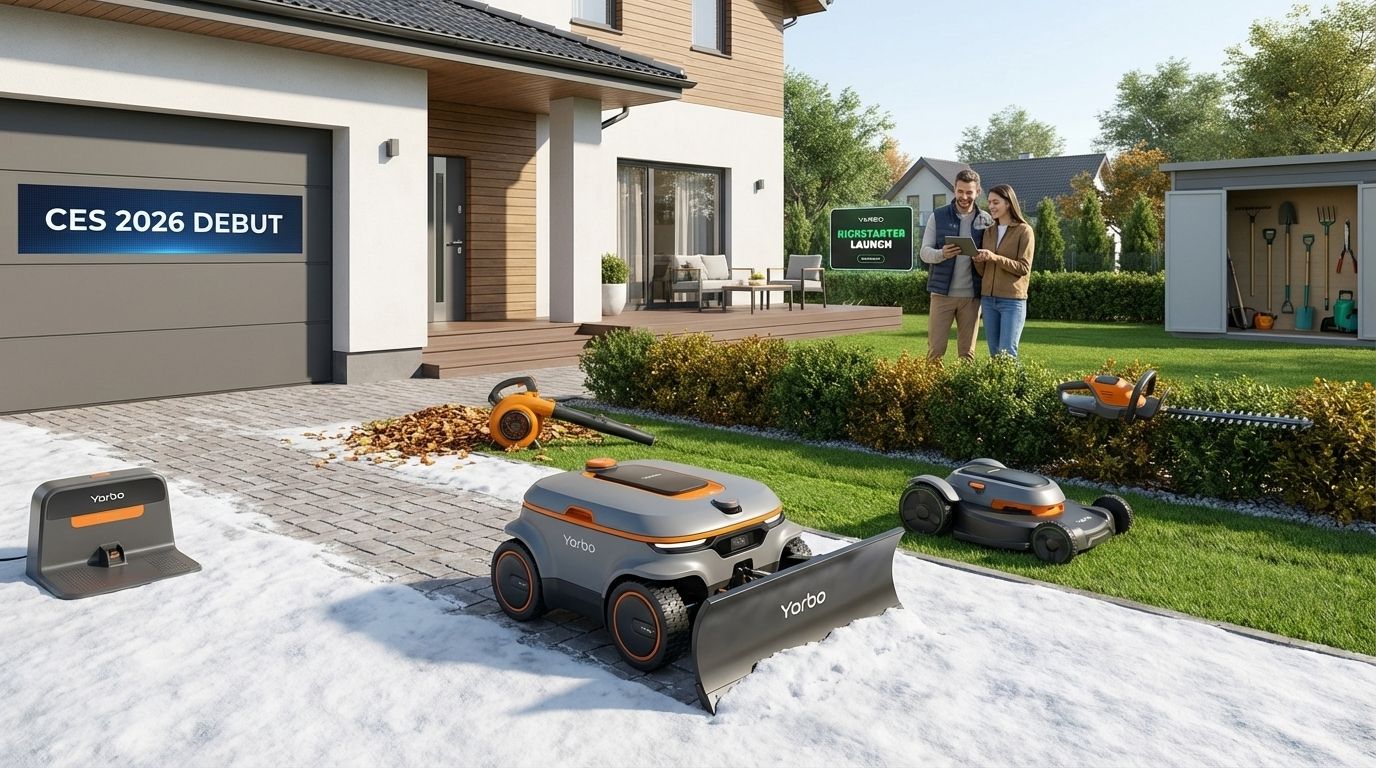
Image Credit: AIGPE®
🧠The Pulse
Yarbo announced the M Series modular yard robot to debut at CES 2026. The M1 base pairs with attachments for mowing, snow plowing, leaf collecting, and hedge trimming. The Kickstarter campaign launches in January, signaling a shift toward everyday yard maintenance robots.
📌The Download
Interchangeable modules: The M Series features a universal M1 base with modules for mowing lawns, plowing snow, collecting leaves, and trimming hedges. The modular system aims to replace multiple yard tools and reduce storage needs.
Ease of use: Yarbo emphasises quick set‑up, wireless charging, and a compact design suitable for small or large yards. The robot can navigate autonomously and return to its charging dock when tasks are complete.
Market pivot: Earlier Yarbo models targeted large estates with premium pricing. The M Series shifts to everyday homeowners, offering more affordable modules and focusing on convenience.
Global rollout: The company will launch a Kickstarter campaign in early January, followed by global e‑commerce sales and local retail partnerships. Success could spur the adoption of modular yard robotics.
💡What This Means for You
Modular yard robots could free up weekend time and reduce the number of tools needed for home maintenance. Professionals should consider how robotics might influence landscaping services, equipment sales and customer expectations about automated outdoor care.

Image Credit: AIGPE®
🧠The Pulse
Chinese technology firms have placed orders for more than two million of Nvidia’s latest H200 AI chips, but Nvidia has only about 700,000 units in stock. The supply crunch is forcing the company to ask TSMC to ramp production, with new output expected in the second quarter of 2026. Beijing still needs to approve shipments, and regulators may require buyers to bundle orders with domestic chips.
📌The Download
Unprecedented demand: Chinese cloud and internet companies ordered over two million Nvidia H200 AI accelerators, far exceeding the roughly 700,000 chips Nvidia has on hand. Demand stems from aggressive deployment of generative AI services across industries.
Production bottleneck: Nvidia has asked Taiwan’s TSMC to accelerate manufacturing, but new supply will not be ready until the second quarter of 2026. Analysts warn that this delay could tighten global AI chip availability and inflate prices.
Regulatory hurdle: Beijing has not yet approved H200 shipments. Chinese authorities may require buyers to purchase domestic chips alongside Nvidia’s processors, potentially slowing adoption.
Global ripple effects: The shortage underscores how geopolitical tension and manufacturing constraints influence AI hardware. Enterprises building AI infrastructure should anticipate longer lead times, diversify suppliers and explore alternative accelerators to mitigate supply‑chain risks.
💡What This Means for You
Expect AI hardware to remain scarce and expensive. Planning AI projects will require securing compute resources well in advance and considering cloud‑based alternatives. Professionals should track regulatory changes and evaluate whether alternative chip vendors or hybrid cloud setups can meet training and inference needs.
IN AI TODAY - QUICK HITS
⚡Quick Hits (60‑Second News Sprint)
Short, sharp updates to keep your finger on the AI pulse.
Chip IPO Frenzy: China's Biren Raises $717 M: Chinese AI chip firm Biren Technology raised HK$5.58 billion ($716.85 million) in its Hong Kong IPO on Dec 31. The offering was oversubscribed by both institutional and retail investors, underscoring China’s push to build homegrown alternatives to U.S. AI chips and increasing pressure on Nvidia and other foreign suppliers.
Brookfield Launches Radiant Cloud to Lease AI Chips: Infrastructure giant Brookfield is launching a cloud business called Radiant to lease chips inside data centers directly to AI developers. The venture is tied to a new $10 billion AI fund and will allow Brookfield to prioritize its own data‑center projects in France, Qatar and Sweden. The move aims to capture more value from the AI supply chain.
TOOL TO SHARPEN YOUR SKILLS
📈Improve Processes. Drive Results. Get Certified.

AIGPE® Certified Six Sigma Green Belt
Master the art of solving problems with data, reduce variation, and boost process performance. This Six Sigma Green Belt certification gives you the tools to drive improvement, eliminate waste, and lead projects with confidence and precision.
That’s it for today’s AI Pulse!We’d love your feedback, what did you think of today’s issue? Your thoughts help us shape better, sharper updates every week. |
🙌 About Us
AI Pulse is the official newsletter of AIGPE®. Our mission: help professionals master Lean, Six Sigma, Project Management, and now AI, so you can deliver breakthroughs that stick.
Love this edition? Share it with one colleague and multiply the impact.
Have feedback? Hit reply, we read every note.
See you next week,
Team AIGPE®