- AI Pulse
- Posts
- 5 Free AI Tools Smart Professionals Use to Ace Interviews
5 Free AI Tools Smart Professionals Use to Ace Interviews
A practical, zero-cost system to practice better answers, speak with confidence, and walk into interviews prepared.

Rahul G. Iyer
December 27, 2025
In partnership with


Hello There!
Today’s edition: Key AI updates shaping work today, followed by 5 free AI tools professionals use to prepare for interviews.
CNBC says the AI market is quietly splitting into companies that spend big, those that actually monetize, and those that build the infrastructure, which means corporate professionals may want to check whether their employer is building value or just burning cloud credits. At the same time, an AI startup called Enso proved it could create a viral ad campaign for just $150 using generative tools, politely warning marketing teams that budgets are shrinking while expectations are not. And while KAIST unveiled a humanoid robot that can run, climb, and survive extreme environments, the bigger takeaway for professionals is that robots are moving out of labs and into real workspaces, possibly as your future coworker who never asks for leave.
Here’s what’s shaping the future of AI today.
In today’s AI Pulse
✍️ Smart Brevity – Write clearer, faster, every time.
🎤 Coactive – How AI reshapes content workflows.
🟢 Gladly – AI support that scales without chaos.
📈 AI – Market Splits Into Spend Build Monetize.
🎬 AI – Startup Builds Viral Ad Cheap.
🤖 Humanoid Robots – Edge Toward Extreme Work.
🧠 AI Tools Professionals Use for Interviews
⚡ In AI Today – Quick Hits
The next wave of AI might not fold your laundry… but it could finally untangle your entire life.
Clear communicators aren't lucky. They have a system.

Here's an uncomfortable truth: your readers give you about 26 seconds.
Smart Brevity is the methodology born in the Axios newsroom — rooted in deep respect for people's time and attention. It works just as well for internal comms, executive updates, and change management as it does for news.
We've bundled six free resources — checklists, workbooks, and more — so you can start applying it immediately.
The goal isn't shorter. It's clearer. And clearer gets results.
Get Your Content Ops Workflows Right in 2026 - Best Practices
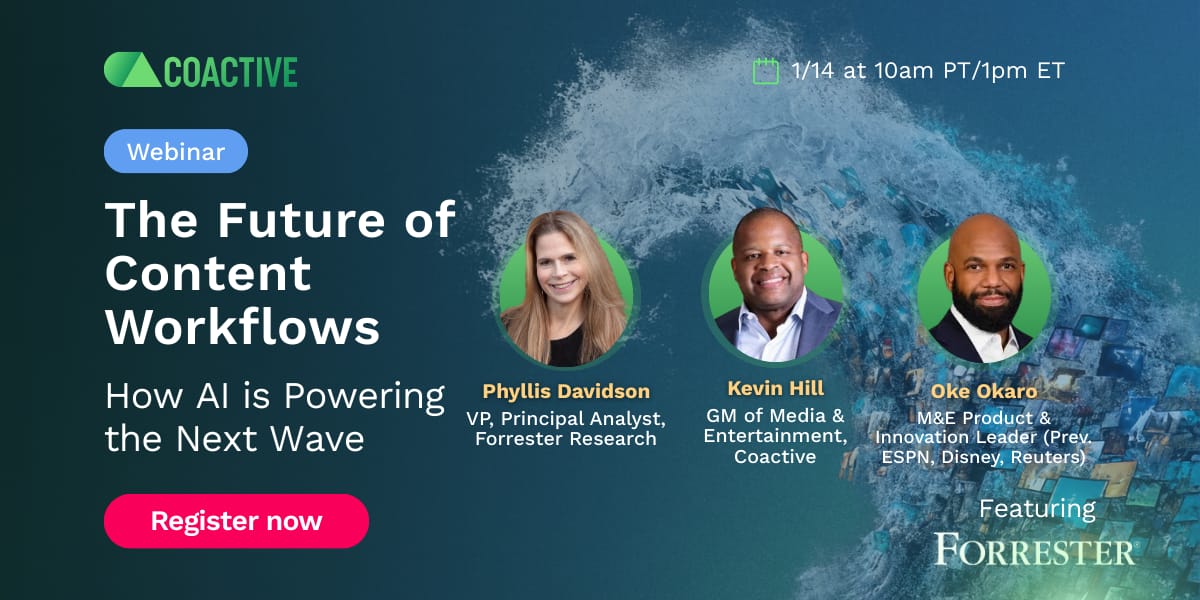
Want to manage and monetize your content to the fullest in 2026?
Join Forrester Research and media execs with experience spanning ESPN, Comcast, and Disney on January 14, 2026, at 10am PT/1pm ET.
Get actionable insights and perspectives from the leaders who built and transformed top media and entertainment organizations.
Can you scale without chaos?

It's peak season, so volume's about to spike. Most teams either hire temps (expensive) or burn out their people (worse). See what smarter teams do: let AI handle predictable volume so your humans stay great.

Image Credit: AIGPE®
🧠The Pulse
A CNBC analysis argues that the AI market is poised to split into three segments: money‑losing AI spenders, profit‑generating monetizers and infrastructure builders. Investors are urged to differentiate companies based on cash flows, debt and business models rather than lumping all AI plays together.
📌The Download
Spenders vs. monetizers: The AI market is splitting between companies pouring billions into AI infrastructure with unclear near-term revenue and those already monetizing AI through subscriptions, enterprise services, or usage-based pricing. Investors are increasingly focused on distinguishing aspirational spending narratives from businesses that generate predictable cash flow today.
Infrastructure winners: Firms supplying chips, cloud capacity, networking, and model-training services may emerge as long-term beneficiaries of AI expansion. Blue Whale Growth Fund manager Stephen Yiu argues that hardware and infrastructure providers could capture outsized value as AI workloads scale globally.
Valuation risks: Analysts warn against assigning premium valuations to unprofitable AI companies. The sector has issued roughly $428 billion in bonds this year, raising concerns about leverage, refinancing risk, and sustainability if revenue growth fails to materialize.
Strategic positioning: For investors and professionals, identifying whether a company primarily spends, monetizes, or enables AI can guide smarter investment decisions, partnerships, and career planning.
💡What This Means for You
The AI ecosystem is diverging. Professionals considering career moves, partnerships or investments should evaluate whether a company generates value, builds infrastructure or merely spends on AI. This lens can help avoid hype and identify stable opportunities in a rapidly evolving landscape.

Image Credit: AIGPE®
🧠The Pulse
Israeli startup Enso created a provocative “Free Nathan” advertising campaign entirely with AI tools, including ChatGPT, Midjourney, Veo 3.1, Canva and ElevenLabs, spending just $150 in six hours. The resulting videos, posters and voice‑overs would have cost tens of thousands using traditional methods.
📌The Download
All-AI production: Enso built the entire “Free Nathan” campaign using only generative tools. ChatGPT handled scripting, Midjourney created visuals, Veo 3.1 generated video, Canva managed editing, and ElevenLabs produced voiceovers. A single person assembled the full campaign end to end in roughly six hours.
Cost savings: Comparable traditional campaigns often cost between $10,000 and $20,000 when accounting for creative agencies, filming, editing, and talent. Enso’s AI-driven approach reduced total spend to about $150, illustrating how generative tools dramatically lower barriers to entry for small teams.
Narrative impact: The campaign imagines a disturbing scenario where AI clones of kidnapped children record ransom messages. Its unsettling tone and speculative realism triggered strong emotional responses, helping the video spread rapidly online and attract millions of views despite minimal production resources.
Implications for advertising: Enso’s result signals faster creative testing cycles, cheaper experimentation, and urgent ethical debates around AI-generated, emotionally manipulative storytelling practices globally.
💡What This Means for You
Marketing budgets are poised to shrink as AI tools enable rapid, low‑cost content creation. Professionals should learn to leverage these tools while maintaining ethical standards. The shift may demand new skills in prompt‑design, quality control and brand governance.
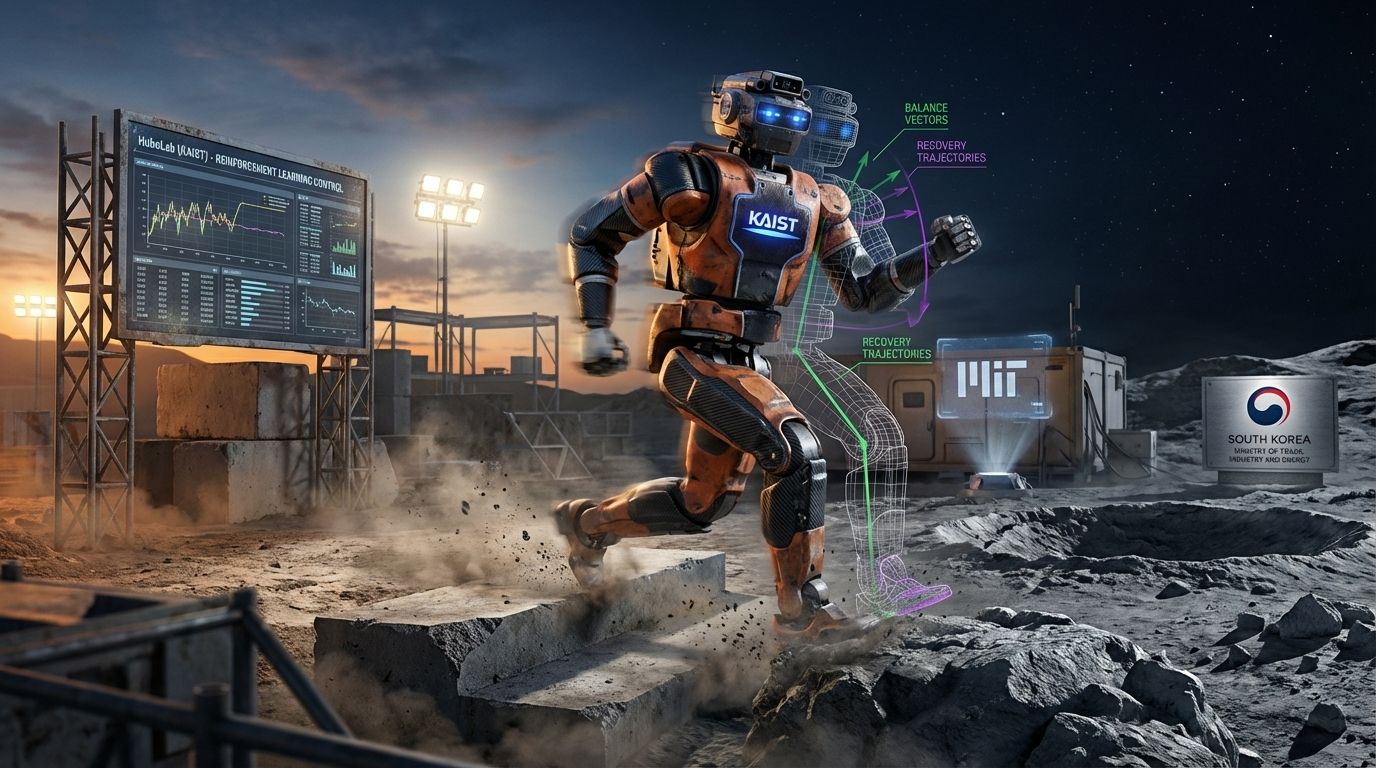
Image Credit: AIGPE®
🧠The Pulse
South Korea’s KAIST introduced a next‑generation bipedal robot designed to operate in hazardous industrial and lunar settings. Standing 1.65 m tall, the robot can run at 12 km/h, climb 30 cm steps and maintain balance on uneven terrain, showcasing progress in mobility and autonomy.
📌The Download
Integrated hardware and AI: KAIST’s HuboLab designed the humanoid’s motors, actuators, and controllers in house, allowing tight coupling between mechanical systems and a reinforcement learning controller that directly governs balance, motion, and recovery behaviors.
Simulation to reality transfer: The AI controller was trained extensively in simulated environments, then deployed on the physical robot, closing the sim to real gap and delivering stable, repeatable performance across unpredictable terrains and dynamic operating conditions.
Mobility feats: The humanoid reaches speeds of twelve kilometers per hour, climbs steps up to thirty centimeters, and maintains balance on uneven ground without visual feedback, demonstrating advanced locomotion suited for industrial sites and extreme environments.
Global collaboration: The project involves cooperation with MIT and internal KAIST divisions, funded by South Korea’s Ministry of Trade, Industry and Energy, with a long term goal of deploying fully capable humanoids for lunar exploration and hazardous industrial missions in future operational deployments.
💡What This Means for You
Humanoid robots with improved mobility and AI are approaching real‑world deployment. Workers in logistics, mining or construction could soon collaborate with bipedal robots that operate in dangerous places. Expect new opportunities, and new safety protocols, as robots take on tasks previously reserved for humans.
FREE DOWNLOAD - INTERVIEW PREP REFERENCE (PDF)
Most interview preparation fails because it is unstructured. Professionals prepare with a system. This free PDF shows how professionals use free AI tools to practice answers, improve delivery, and build real interview confidence. You will get a clear breakdown of five tools, how each one is used, and how they work together so you can prepare smarter, stay confident, and walk into interviews ready.
Confidence in interviews comes from preparation, not luck.
|

IN AI TODAY - QUICK HITS
⚡Quick Hits (60‑Second News Sprint)
Short, sharp updates to keep your finger on the AI pulse.
Reliability Study Finds Grok Hallucinates Less Than ChatGPT and Gemini: An independent test of 10 chatbots found Elon Musk’s Grok had the lowest hallucination rate at 8%, with higher user satisfaction than ChatGPT and Gemini. The study rated ChatGPT and Google’s Gemini less reliable due to higher hallucination rates of 35% and 38% respectively.
Gen Z Leader Urges Mindful Use of AI Amid “AI Anxiety”: Kiara Nirghin, a Gen Z founder and Forbes 30 Under 30 laureate, told Fortune that young people view AI as a native language but grapple with “AI anxiety” when models evolve rapidly. She believes human “taste” and perspective will differentiate us in an AI‑saturated world.
That’s it for today’s AI Pulse!We’d love your feedback, what did you think of today’s issue? Your thoughts help us shape better, sharper updates every week. |
🙌 About Us
AI Pulse is the official newsletter by AIGPE™. Our mission: help professionals master Lean, Six Sigma, Project Management, and now AI, so you can deliver breakthroughs that stick.
Love this edition? Share it with one colleague and multiply the impact.
Have feedback? Hit reply, we read every note.
See you next week,
Team AIGPETM